

To further advance regional coordinated development of the service industry and promote the flow and sharing of high-quality intellectual property service resources, Suzhou and Changchun formally established a cross-regional collaboration mechanism for the IP service industry in January 2026 and have since continuously advanced cross-regional collaboration and exchanges. On 24 October, the 5th session of the "Lakeside Saturday" IP Lecture Series, jointly hosted by the Suzhou Administration for Market Regulation (Intellectual Property Bureau) and the Changchun Administration for Market Regulation (Intellectual Property Bureau), was successfully held at the Suzhou Campus of Nanjing University. Wang Weixue, Director-General of the Changchun Administration for Market Regulation (Intellectual Property Bureau), attended the event. Yu Ting, Deputy Director-General of the Changchun Administration for Market Regulation (Intellectual Property Bureau), and Shi Weibing, Deputy Director-General of the Suzhou Administration for Market Regulation (Intellectual Property Bureau), participated and delivered remarks. More than 80 participants — including senior decision-makers from enterprises in the Yangtze River Delta region and from leading enterprises in Changchun's key industries, as well as representatives of relevant municipal authorities and the municipal bureaus — gathered to take part in this rigorous intellectual exchange on "rule-making".
I. Winning the "First Move" Through Rules: Global Pathways Reach Far
Guided by the Institute's founding mission of "China-based perspective, global experience", Professor Shao Ke, Founding Dean of the Global Intellectual Property Institute of Nanjing University, drew on his profound theoretical foundation to present, under the theme "From 'Being Hit by the Rules' to 'Rule-Leading Entrepreneurs'", the little-known complex spatial structure and frontline realities of global competition to the enterprises present.
Professor Shao pointed out that when many companies today talk about "going global", their vision stops at products, channels and market share — and, compared with the mindset of executives at multinational corporations, this constitutes the biggest cognitive and experiential blind spot. The true commanding height lies in who can — and how one can — define legislation, international agreements and technical standards, and how to implement these front-end arrangements through sophisticated and complex legal structures. From the global contest over pharmaceutical patents and 5G standard-essential patents to the rivalry over technological routes in new energy, what lies behind is never merely products and channels, nor the empty phrase of "contesting discourse power over rules", but rather how these contests are designed, realised and implemented. What enterprises should understand is not merely legislative and judicial principles or templates of legal services, still less playing the passive "good student" conforming to existing frameworks or the "comparative law enthusiast". Rather, their understanding must be built on a scientific and profound grasp of industries and innovation, persistently drawing on the scarce and valuable global experience led by a China-based perspective. Only in this way can they proactively become "rule-leading entrepreneurs".
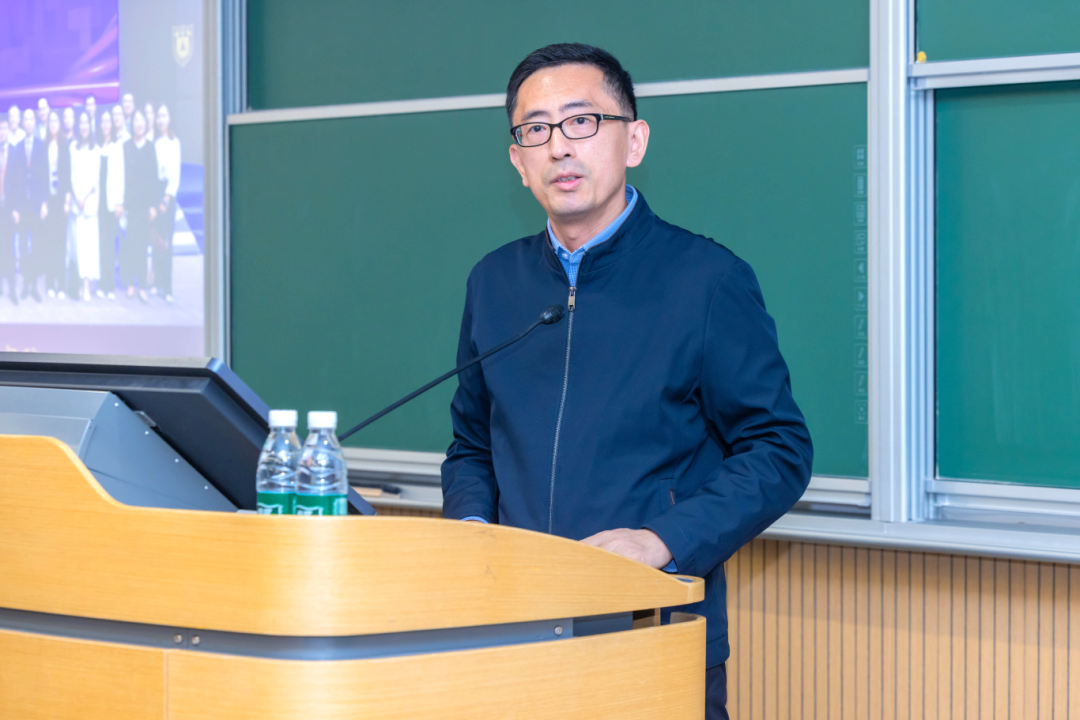
Professor Shao then drew on a wealth of cross-border cases to reveal the root causes of — and the fundamental way out of — the overseas risks currently confronting enterprises. These difficulties are no longer isolated challenges confined to a single link, but rather a multi-dimensional, interwoven "frontline map" spanning all regions and every link of the chain. From technology blockades at the upstream end of supply chains, to intellectual property barriers to overseas market access, and further to waves of patent infringement claims on cross-border e-commerce platforms, risks are ubiquitous and interlocked — and their root causes can never be addressed by defensive measures alone. Faced with such a complex landscape, Professor Shao made his position clear: imitation and passive alignment are not the answer — insight into the essence and independent construction are the fundamental way out. The entire lecture represented a deep fusion of profound Chinese theoretical scholarship and frontline overseas experience; the audience nodded in agreement time and again, and warm applause rang out on several occasions.
II. Reading the Game and Sharpening the Edge: Forging Ahead Through the Waves
Ideas sparked further in the roundtable session. Moderated by Wang Pengfei, Deputy Director of the Development Planning Department of Gusu Laboratory (Suzhou Institute for Future Industries), Professor Shao engaged in an in-depth, pain-point-driven dialogue with two battle-tested experts from the industry frontline — Yang Jiejing, Senior Legal Counsel at Lung Tin Law Firm, and Zang Lin, Director of IP Business at FAW Technology.
Why do Chinese products going global so often come under intellectual property "sniper fire"? Drawing on nearly two decades of hands-on experience in the integrated circuit industry, Lawyer Yang pointed out: "Many enterprises do not lose on technology — they lose on rules. The product has gone abroad, but the IP 'armor' is still left at home." Taking cross-border technology transaction disputes and standard-essential patent contests as her entry point, she vividly reconstructed the real picture of enterprises being "hit" time and again as they go global: lagging patent portfolios, absent compliance awareness, and only a half-grasp of the overseas rules of the game — each shortcoming a bullseye for a rival's precision strike.
Director Zang, in turn, approached the subject from the once-in-a-century transformation of the automotive industry, offering a penetrating analysis of the "hidden traps" awaiting Chinese manufacturers overseas: regional barriers built on technical standards, undercurrents in supply chain compliance, double standards in intellectual property examination, and contests over narratives in the public opinion arena. "A visible opponent is not to be feared; it is the invisible rules that prove fatal," Director Zang emphasized. It is precisely by identifying these "invisible rules" that FAW, on its journey of going global in new energy and intelligent connected vehicles, has gradually built a proactive defence system.
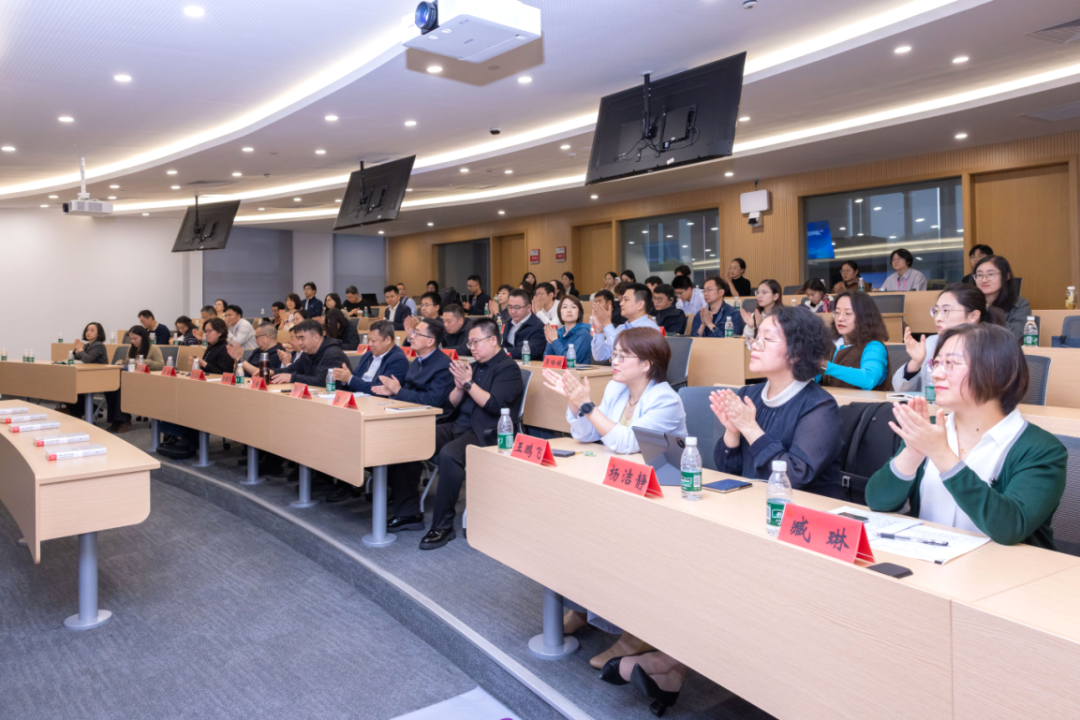
The three guests reached a strong consensus: intellectual property should not be treated as a "back-office cost" of the legal department, but operated as a "core asset" of corporate strategy. From participating in the shaping of international standards to proactively exporting technological solutions, and from building a moat of patent portfolios to telling China's innovation story well — every step serves to "recharge" the enterprise's reserve of global discourse power.


