

On 19 September, the fourth session of the "Lakeside Saturday" Intellectual Property Lecture — held in conjunction with the unveiling ceremony for the second cohort of Suzhou institutions approved as Technology and Innovation Support Centers (TISCs) — took place at Xi'an Jiaotong-Liverpool University (XJTLU). More than 100 attendees, including core decision-makers from enterprises across the Yangtze River Delta, representatives of the Jiangsu Provincial Intellectual Property Office, and officials from relevant Suzhou municipal departments and bureaus, gathered for this highly practical course focused on trade secret protection.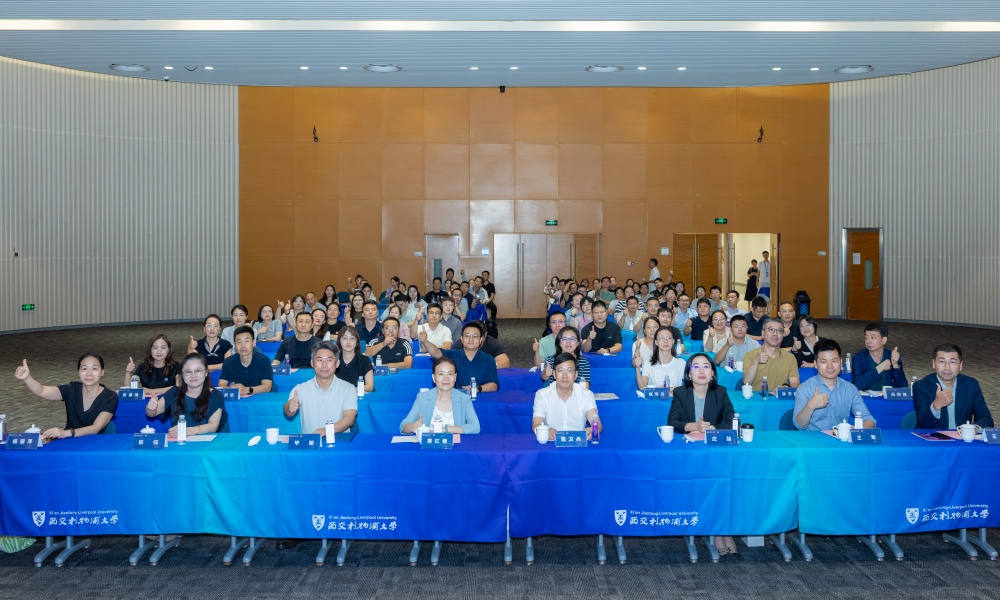
Under the guidance of the Jiangsu Provincial Intellectual Property Office, the event was hosted by the Suzhou Municipal Administration for Market Regulation (Intellectual Property Office), with support from the Science, Technology and Innovation Commission of Suzhou Industrial Park (Intellectual Property Office). It was organised by the China Intellectual Property Training Center (Yangtze River Delta) Practice Base, the National Intellectual Property Training Base for Micro, Small and Medium-sized Enterprises (Suzhou), Suzhou Dushu Lake Science and Education Development Co., Ltd., the Suzhou Industrial Park Library, and Xi'an Jiaotong-Liverpool University.
XJTLU's IP service capacity reaches new heights
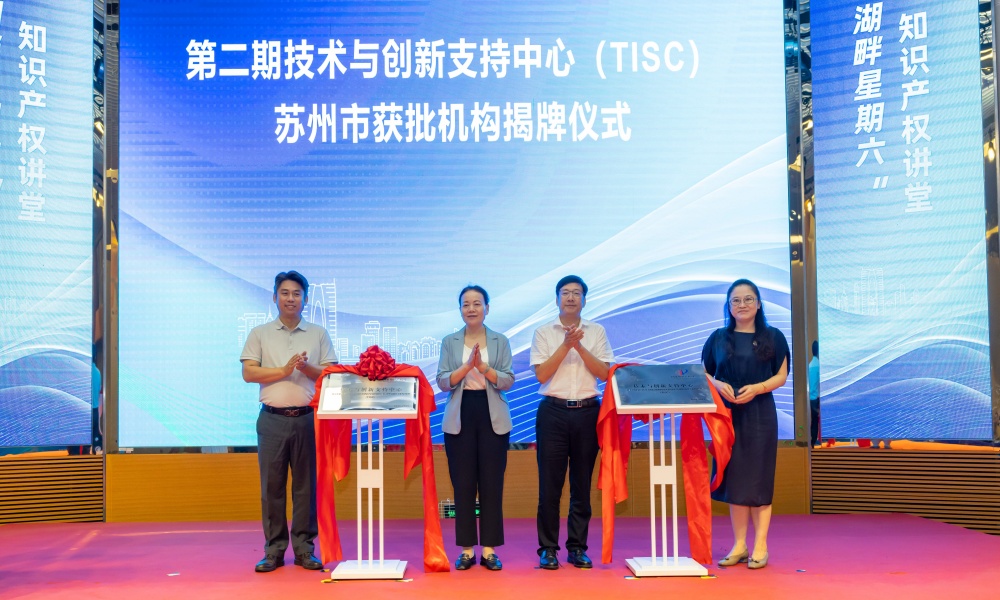
Bringing together the strengths of its Library, the Research Productivity and Innovation Office, and the International Innovation Hub, XJTLU was successfully approved as a member of the second cohort of Technology and Innovation Support Centers (TISCs). At the event, officials from the provincial and municipal intellectual property offices, together with Dr Xin Bi, Director of XJTLU's Knowledge and Information Centre, jointly unveiled the University's TISC plaque.
The event also introduced Suzhou's intelligent public-service agents for intellectual property to participating enterprises. Six IP service agents have been designed to target industry pain points such as overseas infringement risks faced by small and medium-sized enterprises, low efficiency in patent commercialisation, and the high cost of professional services. Focusing on three core directions — supporting compliant overseas expansion, realising the value of intellectual property, and upgrading the region's key industries — the agents form an intelligent service matrix covering the entire innovation lifecycle.
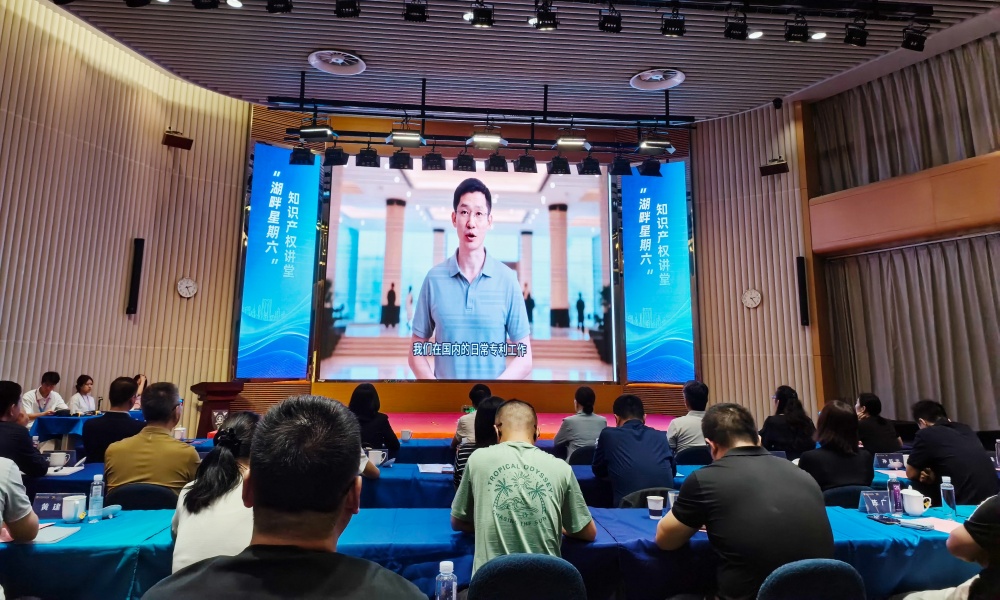
Drawing on the platform's resources, XJTLU will connect with these intelligent service carriers to ensure that high-quality, accessible IP public services reach innovation teams on campus and a broad range of market innovators.
Unlocking the keys to corporate trade secret protection
Ms Zhe Zhuang, Senior Partner at TianTong Law Firm (Shenzhen), delivered a keynote lecture titled "The Tension Between Talent Mobility and Technology Leakage: Pain Points, Case Law, and System-Building for Trade Secret Protection in Tech Enterprises." Combining real judicial precedents with hands-on industry experience, she systematically unpacked the core logic and practical approaches to trade secret protection for technology companies in the age of AI.
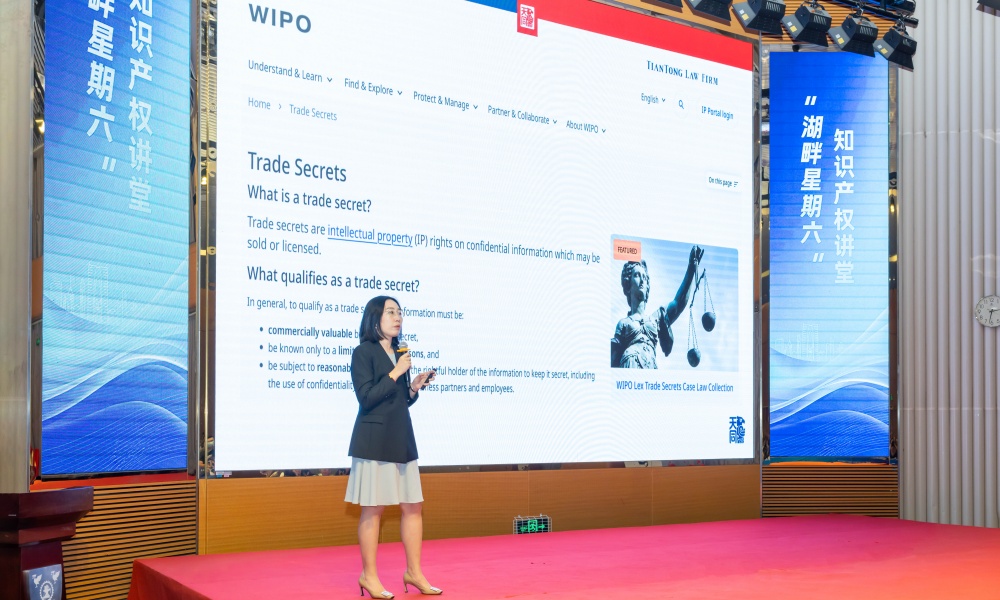
Zhuang noted that companies must learn to "draw circles" with institutional rules, "leave traces" with technology, and "show their sword" with legal tools — drawing a clear red line between respecting talent's freedom to change jobs and safeguarding core assets. With AI advancing rapidly, theft methods are becoming increasingly invisible, and traditional physical isolation and paper-based confidentiality agreements are no longer adequate. Enterprises must give every line of code and every piece of data an "identity," ensure every access leaves a "footprint," and build data firewalls suited to the AI era.
From a litigation perspective, Zhuang structured her lecture around three modules — "the golden 72 hours for criminal complaints," "the three lines of defence in internal compliance," and "a systematic approach to proactive prevention" — laying out a complete operational map for enterprises to defend themselves in advance. She emphasised: "The highest form of trade secret protection is not winning a lawsuit, but making would-be leakers afraid to reach out — and ensuring that even if they do, they cannot take anything away, and even if they take it, they cannot use it."
Roundtable dialogue explores practical pathways for trade secret protection
Following the keynote, the event moved into a practical roundtable dialogue. Moderated by Mr Kan Wang, Director of Intellectual Property at Suzhou Ruipaining Technology Co., Ltd., Zhuang engaged in an in-depth discussion on criminal protection of trade secrets with Mr Jun Wang, Director of the Third Procuratorial Department of the People's Procuratorate of Suzhou Industrial Park.

The three speakers agreed that the strongest line of defence for trade secrets lies not in contractual clauses, but in institutions embedded in an organisation's very bloodstream. Clear ownership confirmation, accountability assigned to individuals, complete record-keeping, and early-warning mechanisms positioned in advance — these four fundamental disciplines form the inviolable bottom line of trade secret protection.
Going forward, XJTLU's TISC will fully leverage the University's strengths in research, talent, and academic disciplines. Focusing on research and innovation on campus and the technological development needs of regional enterprises, it will continue to provide professional, precise, and efficient intellectual property information services, helping regional innovators upgrade and grow, and contributing sustained university strength to Suzhou's development as an intellectual property hub and to the high-quality growth of its science and innovation industries.


